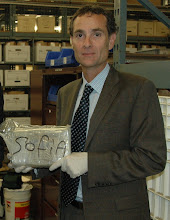
LOS ANGELES-Police Chief William Bratton called on the City Council
to speed up the drafting of stricter regulations on medical marijuana
clinics, calling current state law "Looney Tunes."
Bratton also termed as unfortunate the new Obama administration
policy of targeting marijuana dispensaries only when they violate
both federal and state law, instead of just federal law.
"I think that the policy of the federal government at this time is
unfortunate," the chief told a press conference Wednesday. "I think
the policy of this state is 'Looney Tunes.'"
The city passed a moratorium on new marijuana dispensaries in
September 2007 in order to draft regulations to operate the clinics.
"They pass a law, then they have no regulations as to how to enforce
the darn thing and, as a result, we have hundreds of these locations
selling drugs to every Tom, Dick and Harry," Bratton said.
California voters approved Proposition 215 in 1996, making it legal
for people suffering from certain ailments to grow, smoke and possess
marijuana upon a doctor's recommendation.
In 2003, the state set up a system for issuing ID cards to those with
"prescriptions" for medicinal marijuana, but many claim the system
has been abused and is out of control.
"While I fully support its use for medicinal purposes, why don't we
regulate it like we do Lipitor or Viagra," Bratton said. "You can't
buy those two without getting it through a legitimate pharmacy. If
this drug is so important and so helpful, why is it not regulated
like every other drug?"
Thursday, April 2, 2009


Border Patrol reports and increase in drug seizures
Wednesday, April 01, 2009 at 11:03 a.m.
http://www.valleycentral.com/news/news_story.aspx?id=281311
Border Patrol from the Rio Grande Valley Sector told Action 4 News
that they have seen a big increase in drug smuggling cases.
Agency officials said they had more than 100 seizures yielding more
than 18,000 pounds of marijuana worth $15 million dollars.
Border Patrol agents said that represents an 87 percent increase from
the time last year.
The largest bust over the last week was at the Falfurrias checkpoint
where agents discovered nearly 2,600 pounds of marijuana inside a
tractor-trailer.
Border Patrol agents also seized nearly 1,300 pounds of marijuana
near the Granjeno area.
"We have fiscal year-to-date in marijuana apprehensions, we're over
435,000 pounds of marijuana seized fiscal year-to-date," said local
Border Patrol spokesman John Lopez. "Our cocaine seizures are
approximately 2,000 pounds fiscal year-to-date."
Eureka considers pot dispensaries as possible funding source
Donna Tam/The Times-Standard
Posted: 04/02/2009 01:32:26 AM PDT
As Eureka talks about establishing some regulated medical marijuana dispensaries as a way to increase the city's tax revenue, Arcata said it's still working on collecting years' worth of sales tax from its dispensaries.
At a Eureka City Council budget goal-setting session Tuesday night, Councilwoman Linda Atkins suggested that the city pursue a way to establish regulated medical marijuana dispensaries as a way to increase revenue and tackle problems associated with grow houses in the community.
"It's already there, it's happening in our community and if we continue to let it happen ... underground, it's going to be detrimental to our community," Atkins said.
At the next City Council meeting, she said she will formally ask staff to look into the possibility of forming some dispensary regulations. Atkins said she thinks that if the city keeps the dispensaries tightly regulated, the city will benefit.
Other cities, she said, are estimating that they've been able to raise between $500,000 and $1.5 million through medical marijuana dispensary taxes.
But officials in Arcata, which currently has four dispensaries operating, said the city has encountered some difficulties in benefiting from those taxes.
Arcata's Finance Director Janet Luzzi said her records show one of the four paid all of its sales tax. Arcata is supposed to receive 1 percent of the sales tax businesses report to the state Board of Equalization, she said. In the last few years, the state has reported sales tax from two of the dispensaries, and one of those paid only a small amount, she said.
Luzzi said state confidentiality laws preclude her from revealing which dispensaries are not paying.
When contacted by the Times-Standard, representatives from three of the dispensaries said they have been paying taxes to the state.
Stephen Gasparas of the Arcata iCenter, attorney Greg Allen of Humboldt Medical Supply and Carla Ritter of The Humboldt Cooperative said their respective organizations have been dutifully paying taxes.
Attempts to contact the Humboldt Patient Resource Center were unsuccessful.
Allen said dispensaries welcome being a part of the taxation process, since it validates them as a part of the business community.
"This industry historically has been one created by outlaws. Historically, because it's been done by outlaws, it has not been taxed," he said. "The fact that we're even having this discussion now is a big example of how far it has come."
The board amended its sales tax policy in 2005 to allow vendors of medical marijuana to apply for a seller's permit, and report and pay the taxes due on sales.
Sales tax amounts are reported to the state, which then reallocates the money to local agencies based on the total of the return, according to Anita Gore, spokeswoman for the state Board of Equalization.
Gore said the state is not allowed to comment on the revenue of specific businesses, due to taxpayer confidentiality rules, and the board's database does not provide a breakdown of which permitted businesses are medical marijuana dispensaries since the information is self-reported.
But the state does have methods in place for ensuring that businesses are reporting sales tax amounts accurately, she said.
"We are responsible for the auditing of companies to make sure they pay the appropriate amount of tax," Gore said, adding that a statewide compliance and outreach program was initiated in September. The program will have specialists systemically visiting individual businesses -- ZIP code by ZIP code -- to observe their transactions.
For the city of Arcata's purposes, Luzzi said she will need to see some proof that sales tax is being reported from the dispensaries. She said there may be some reporting issues that she is not aware of, and she has tried to take that into consideration.
Luzzi added that she sent out a letter in March 2008 in hopes it would change the situation. She said she is waiting to see if the sales tax revenue will come through by December, when all the dispensaries need to be in compliance with the city's new land use codes.
If there is no change, she said she will vigorously pursue the issue.
Arcata Mayor Mark Wheetely said the probelms surrounding the collection of sales tax from dispensaries illustrates how medical marijuana is uncharted territory for most agencies.
"There's been this rather blurry process," he said, adding that it seems the policies of state and local agencies may now finally be converging. Arcata may need to revisit its policies on medical marijuana taxes if things continue to clash, he said.
Donna Tam can be reached at 441-0532 or dtam@times-standard.com.
http://www.times-standard.com/localnews/ci_12053502
Drug Czar Renewed Focus on Prevention
Nominee Says Will Take a Balanced Approach to Drugs, Focus on Prevention, Treatment
April 2, 2009—
The Obama administration's nominee for director of National Drug Control Policy said he will take a balanced approach to drug policy with a renewed focus on the prevention and treatment of addiction, if he is confirmed as the nation's new drug czar.
In testimony before the Senate Judiciary Committee on Wednesday, Seattle Police Chief Gil Kerlikowske said he would focus on reducing violence along the Mexican border and on stemming the supply of illegal drugs, but said "the greatest contribution we can make toward [international] stability would be to reduce our demand for illicit drugs."
The nomination of Kerlikowske, the police chief of a relatively liberal city that has been at the forefront of developing alternative approaches to combating illegal drugs, has been widely seen as part of a broader shift away from long prison sentences for drug offenders and toward an emphasis on prevention and treatment.
"There will be a renewed focus on evidence-based approaches to reduce demand for drugs, through prevention as well as treatment," Kerlikowske said, according to his prepared statement.
Several states and the federal government have recently signaled their willingness to consider alternatives to the tough-on-crime approach that has often dominated drug policy.
Attorney General Eric Holder has said that the Justice Department will not prosecute local medical marijuana dispensaries so long as they comply with state medical marijuana laws.
Sens. Jim Webb, D-Va., and Arlen Specter, R-Pa., have sponsored legislation to create a commission to review the nation's criminal justice system, with Webb saying last year, "our approach to curbing illegal drug use is broken."
Drug Reform Advocate: 'Radical Difference' From Bush Administration
"There is a broader trend to roll back parts of the war on drugs. I think there are going to be significant changes in domestic drug policy," said Ethan Nadelmann, director of the Drug Policy Alliance, a drug reform advocacy group, calling Kerlikowske's approach a "radical difference from the Bush administration."
Several states, even traditionally tough-on-crime states like Kentucky, are also exploring treatment alternatives and eliminating mandatory minimum drug sentences. This month, Kentucky passed a law sending hundreds of drug offenders to treatment instead of prison. California is considering sending low level drug offenders to treatment instead of parole.
States Roll Back Tough Drug Sentencing Laws
Last week, legislative leaders in New York agreed to relax the state's 1970s-era drug laws, once among the toughest in the country. Those laws, known as the Rockefeller drug laws, after then-Gov. Nelson Rockefeller, who implemented them, sparked a national movement for mandatory minimum sentences for even low-level drug crimes.
In Ohio, the prosecuting attorney's association has proposed eliminating mandatory minimum sentences for drugs. Arizona's attorney general has reportedly said he would consider legalizing marijuana.
"We need to start to be smart on crime and not just tough on crime," said J. Michael Brown, the secretary of the Kentucky State Justice and Public Safety Cabinet. "Drugs have been a real bane on the criminal justice system. What we're seeing is a paradigm shift is to try to break the cycle of substance abuse."
At the state level, the changes appear to be driven as much by budget problems as by ideology. Corrections budgets have quadrupled in the last 20 years, to more than $50 billion in 2008, according to the Pew Center on the States.
With 2.3 million people in prison and another 5.1 million on probation or parole, states have considered a variety of options to reduce prison populations.
Not everyone sees a significant departure from previous drug policies. John Walters, President George W. Bush's drug czar, said he has not seen indications of a major shift in federal drug policy, saying Bush supported drug courts and treatment.
"The perception may be different. The fact is they would not be very different in emphasis," he said.
Walters said the Obama administration's apparently more tolerant approach to marijuana enforcement, which has not been spelled out in detail, would be a mistake. Walters has argued that the drug remains a serious threat.
"If we don't deal with marijuana, we're not taking seriously the substance abuse problem in the United States," he said. "Everybody would like to push marijuana aside but you can't do it. It is still a serious health problem."
Washington has been one of most liberal states in its approach to marijuana, and is one of 13 in the country with a medical marijuana law. In Seattle, where Kerlikowske is the top cop, voters passed a city ordinance in 2003 making marijuana the lowest law enforcement priority. The city, where crime is at a 40-year low, is also home to the annual Hempfest.
Kerlikowske Said to Take Pragmatic Approach to Drugs
Drug reform activists and people who have worked with Kerlikowske said that while he has not been a champion of Seattle's reforms -- he opposed the 2003 ordinance, arguing that the law was unnecessary -- he has taken a pragmatic approach to drug control and maintains a good relationship with local drug reform activists.
"I expect he will be the first to admit that this is not a challenge that can be addressed by law enforcement alone," said King County Prosecuting Attorney Dan Satterberg. "You can't arrest your way out of the drug problem."
Kerlikowske, president of the Major Cities Chiefs Association, is former deputy director for the Justice's Department's Office of Community Oriented Policing Services. He was police chief in Fort Pierce and Port St. Lucie, Fla., and police commissioner in Buffalo, N.Y., before moving to Seattle in 2000.
Kerlikowske has experienced the problem of drugs in own family. His stepson, Jeffrey, 39, has been arrested several times on drug and other charges, police records show. He is currently in jail in Florida for a probation violation.
"Our nation's drug problem is one of human suffering, and as a police officer, but also in my own family, I have experienced the effects that drugs can have on our youth, our families and our communities," Gil Kerlikowske said when his nomination was announced.
Jeffrey Kerlikowske, in a brief phone interview from jail, declined to discuss his relationship with his father, other than to say that they haven't spoken in more than 10 years.
"My life has nothing to do with him," he said.
He "taught me a lot of good qualities about perseverance and tenacity. He was one of reasons I chose to go into the Marine Corps," Jeffrey Kerlikowske said of his father.
As young police officer, "When everyone else was out bowling at night, he was putting himself through college," he said.
http://abcnews.go.com/Health/story?id=7233062&page=1
Wednesday, April 1, 2009
Michigan's Medical Marijuana Law takes effect Saturday
Posted By: Valerie Lego
Updated:3/31/2009 8:44:43 PM - Posted: 3/31/2009 2:38:33 PM
(WZZM) - Michigan's medical marijuana law, which passed last November, takes affect on Saturday, April 4, 2009.
The Michigan Medical Marijuana Association is expecting about 50,000 patients to apply for licenses in the first two years.
The license application is $100 and that's a fee you'll be required to pay whether you're granted a license or not.
James McCurtis with the Michigan Department of Community Health says the card will allow you to do two things, "Grow it and possess it. It has to be in a closed environment and locked so that it is not easily accessible for anyone."
You can apply for a license as a patient or a care giver. Your doctor will also need to fill out an application verifying you have one of the 13 specified diseases or conditions outlined by the state.
Greg Francisco with the Michigan Medical Marijuana Association estimates there will be about 500 patients applying for a medical marijuana license the first week the law is enacted. "Patients are protected when they buy seeds or clones, but the person that sells them or even gives them those seeds or clones is still at risk," explained Francisco.
And that's a concern for the Michigan Medical Marijuana Association.
McCurtis with the MDCH admits the law isn't perfect. "[It] Doesn't say anything about how you acquire it, where you buy it from, or where you get the seeds so you can begin growing it, because that stuff is still illegal."
The law also doesn't allow for pot shops like in the state of California, which is something the Michigan Medical Marijuana Association would like to see changed when the law comes up for review in two years. "That the legislature will consider allowing not-for-profit co-operatives." Those are slightly different from pot shops in that they are more community-based and do not collect a profit from the sale of medical marijuana.
There's no limit on the number of licenses the state will distribute. The $100 fee won't be refunded if the state refuses to grant you a license.
This law also does not protect you from employer drug tests. It will be up to your company as to how they handle your use of medical marijuana.
Judiciary Committee Votes To Decriminalize Marijuana
By Christopher Keating
March 31, 2009 9:31 PM
On a ground-breaking vote, the legislature's judiciary committee voted Tuesday night to decriminalize marijuana possession for adults 18 and older who have less than one-half of an ounce of the drug.
Under a compromise, the marijuana laws would not change for anyone under 18, and the amount that would be decriminalized was reduced from less than one ounce to less than one half of an ounce. The possession of small amounts would no longer be a crime and would instead be an infraction that could be paid like a speeding ticket.
Some Democratic legislators, including Senate Majority Leader Martin Looney of New Haven, have been pushing hard this year for decriminalization, saying that doing so could save the state more than $11 million in law enforcement costs annually because far fewer people would be sent to state Superior Court to be overseen by prosecutors and probation officials. If marijuana users were issued a ticket that could be paid by mail, they would no longer need to go to court.
The bill passed by 24 to 14 in the Democratic-dominated committee, and the highest-ranking Republican who voted for the measure was deputy House Republican leader William Hamzy of Plymouth.
Despite the positive vote Tuesday night, the bill still faces an uphill battle as Republican Gov. M. Jodi Rell opposes the decriminalization. Rell had vetoed a bill two years ago that would have allowed for the use of marijuana for medical purposes to relieve pain.
"Whether it's little or a lot, it is an illegal substance, and the governor does not support the bill,'' Rell's spokesman, Christopher Cooper, said Tuesday night after the vote.
Cooper noted that the committee vote does not guarantee that the bill would be approved by the full House and Senate. "It may never reach her desk,'' he said.
Nationwide, 22 states have passed some form of decriminalization. One of the most recent was Massachusetts, where people are assessed a civil fine of $100 instead of being charged with a crime.
House Republican leader Lawrence Cafero of Norwalk spoke strongly against changing the law, saying that he has seen drugs ruin numerous lives during the past 16 years that he has served as the expulsion officer for the Norwalk public schools. High-achieving students who once received grades of As and Bs in their classes often fall to Cs and Ds after they have become regular marijuana smokers, Cafero said.
"I've seen kids who are getting high at 7 in the morning, sometimes at 12 years old,'' Cafero told the committee. "It ruins a lot of lives. It ruins a lot of families. ... It's not a matter of efficiency. It's not a matter of money. It's a matter of lives.''
He also reminded middle-aged legislators that they should know that marijuana today is far more potent than the drug that was available in the 1970s.
"What is the message that we as a legislature will send when we decriminalize marijuana?'' Cafero asked. "That sends a wrong message.''
If the bill becomes law, a person driving 80 miles per hour on the Merritt Parkway would receive a bigger fine than the same person who was possessing 15 marijuana joints, Cafero said.
Later in the debate, Sen. Edwin Gomes said that the speeder is creating more of a risk to society, based on the number of accidents on the road.
"That person who is speeding should be fined more than someone who has less than a half ounce of marijuana because he is more of a hazard to the public,'' said Gomes, a Bridgeport Democrat.
Sen. John Kissel, the ranking Senate Republican on the committee, said he does not believe that possession of marijuana should be equated to the level of a parking ticket.
"I don't know where we are going as a state,'' Kissel said. "Fundamentally, I think it sets us on exactly the wrong path.''
Rep. Ernest Hewett, a New London Democrat who supported the bill, said it is essentially impossible to stop someone if they want to smoke marijuana.
"I think alcohol is the real problem. We're just disregarding that,'' Hewett said. "I do agree with Representative Cafero on one thing. This stuff starts at home.''
http://blogs.courant.com/capitol_watch/2009/03/decriminalize-marijuana.html
MMJ in Detroit could spur new industry
Helping patients get approved may be lucrative
Christina Rogers / The Detroit News
Southfield -- A new medical clinic here specializes in helping patients qualify with the state to treat their health problems with medical marijuana.
The nonprofit The Hemp and Cannabis Foundation opened the clinic, its first in Michigan, in December. That's the same month a voter-approved law went into effect legalizing medical marijuana to ease the pain of certain illnesses specified by the state, such as cancer, glaucoma, Alzheimer's disease and HIV/AIDS.
State regulators will begin accepting applications on Saturday from patients who want state authorization to acquire, grow, transport or possess marijuana for therapeutic use.
"If a patient has a qualifying condition, then our doctors will help them get a permit," said chief executive Paul Stanford, adding the clinic pre-screens patients to ensure they've already been diagnosed with an illness approved for treatment with medical marijuana. The clinic doesn't sell or dispense marijuana, because that's against the law.
The Portland, Ore.-based organization is taking roots in what could soon become a budding niche industry in Michigan.
"You're looking at a $10 million annual industry that physicians aren't going to turn their backs on for too long," said Brad Forrester, a communications director for the Michigan Medical Marijuana Association, which began organizing last year and is applying for nonprofit status with the state.
Stanford said he sees the clinic's role as simple: to provide patients with access to doctors willing to write the state-required certifications qualifying them for a medical marijuana permit card.
Despite the drug's legalization in more than a dozen states for medicinal use, many doctors won't recommend it -- either because they fear legal reprisal or don't see it as the best therapeutic option.
New revenue for Michigan
The clinic, the first of its kind in Michigan, charges about $200 for patients looking to get a year-long medical marijuana permit. Multiply that by the estimated 50,000 patients that supporters say the law will help, and medical professionals are looking at a significant new revenue stream.
"That's a nice chunk of change," Forrester said.
For the THCF clinic, the new law is already paying off. It has logged more than 380 patient visits since its opening in temporary space on the 19th floor of a Southfield office tower.
On a recent day, patients were seated in a boardroom-style conference room, where the foundation's staffers educated them about medicinal marijuana, how it can be taken -- by smoking or ingestion -- and about its potential hazards. Attendees, for instance, were advised not to operate a motor vehicle after using the drug.
For patients like Dave Rice, a 30-year-old Brighton resident who suffers from arthritis pain brought on by a severe knee injury, the clinic is providing a more natural alternative to narcotic pain-relievers to soothe his symptoms.
"This might be something that can relieve my pain and help," Rice said, noting he was interested in taking the marijuana in pill form, rather than smoking it -- an option Stanford said many patients choose to avoid a cannabis-induced high.
The foundation also expects to see competition arise in Michigan from other medical clinics or doctors' offices setting up shop to meet the growing demand for medical permits. That's been the case in other states.
While the foundation has not set daily hours here -- only opening a couple days a month -- Stanford said he hopes to have a permanent medical center by May and is hiring staff, including a doctor. Right now, the foundation is using a doctor from its Denver location.
Michigan could see other industry outgrowth, such as stores selling pot-growing equipment.
Use will be well-regulated
The new law could seed another line of business: a caregiver, a person designated to help the ill cultivate or obtain medical marijuana, Forrester said.
"Caregivers are going to be an industry here in Michigan, as well," he said, noting the association's Web site, www.michiganmedicalmarijuana.org, will make space available to caregivers who want to advertise their services.
Under the new law, caregivers also must register with the state, be older than 21 and have no felony drug convictions. Caregivers can ask patients to compensate them for the costs of their service -- such as money spent on growing equipment or buying seeds -- but can't legally sell the product.
The Michigan Department of Community Health will closely regulate doctors and medical clinics that certify patients for clinical cannabis use, watching for abuse, said Melanie Brim, a department director. The department will monitor doctors who appear to churn out high volumes of prescriptions, checking to ensure they're not certifying patients without an in-person exam and a careful look at their medical records, Brim said.
The Michigan State Medical Society, which opposed the original ballot initiative, doesn't have an official position on clinics specializing in medical marijuana, but shares some of the health department's concerns, said David Fox, a medical society spokesman.
Fox said the society advocates communication between specialty doctors and primary care physicians to safeguard against possible drug interactions and to ensure the medical care isn't fragmented.
"You'd want to have a bona fide doctor-patient relationship, including the transfer of medical records," Fox added.
cvrogers@detnews.com.
Subscribe to:
Posts (Atom)