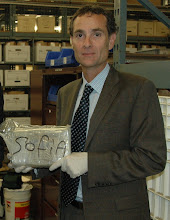
Medical marijuana, what is it and why are the police so afraid of it? Is it really a gateway drug or is it that the large pharmaceutical drug companies don't want you to use it. Face it, they lose money every time someone inhales it. The reason is because every time some one inhales medical marijuana, they are not taking a man made toxic pharmaceutical. And, guess what, the drug companies lose a patient. This is to say the profits of the large drug companies are going down the drain.
The reason you don't see more enforcement at this point is because the government, mostly local government, is broke and they do not have the money to go after marijuana cases.
So, they want to bust more people but at this point, they can not do it because of the budget cuts.
Saturday, August 20, 2011


Wednesday, July 6, 2011
What would you do
Last week, the Obama administration sent out a letter to U.S. attorneys reminding them the cultivation and distribution of marijuana is illegal under federal law (http://californiawatch.org/dailyreport/federal-officials-could-target-states-marijuana-industry-11260). The letter also stated the U.S. Department of Justice can prosecute “those who knowingly facilitate such activities,” strongly implying the government would be cracking down on states, such as California, that up until now have been skirting the law.
In a joint investigation with KQED, and in association with “FRONTLINE,” (http://www.pbs.org/wgbh/pages/frontline/2011/07/feds-remind-states-marijuana-is-illegal.html) the Center for Investigative Reporting is launching a series of reports looking at how the United States, and especially California, has gotten to this point. Today, more than a third of all states have some form of legislation allowing for medical marijuana use – in California, the city of Oakland went further than any other city by proposing to license four large pot-growing facilities.
So what is the solution? KQED and the Center for Investigative Reporting want to hear from you about what measures the federal government and the states could take to deal with this billion-dollar industry. If you were in charge, how would you change the legislation? We’ve crafted a Public Insight Network query that you can fill out either online (http://www.publicinsightnetwork.org/form/cir-and-kqed/59504e7aa117/how-would-you-change-marijuana-laws) or via text and voice messages. To respond by phone, just text the word CAPOT to 30644. We look forward to reading – and hearing – your suggestions.
In a joint investigation with KQED, and in association with “FRONTLINE,” (http://www.pbs.org/wgbh/pages/frontline/2011/07/feds-remind-states-marijuana-is-illegal.html) the Center for Investigative Reporting is launching a series of reports looking at how the United States, and especially California, has gotten to this point. Today, more than a third of all states have some form of legislation allowing for medical marijuana use – in California, the city of Oakland went further than any other city by proposing to license four large pot-growing facilities.
So what is the solution? KQED and the Center for Investigative Reporting want to hear from you about what measures the federal government and the states could take to deal with this billion-dollar industry. If you were in charge, how would you change the legislation? We’ve crafted a Public Insight Network query that you can fill out either online (http://www.publicinsightnetwork.org/form/cir-and-kqed/59504e7aa117/how-would-you-change-marijuana-laws) or via text and voice messages. To respond by phone, just text the word CAPOT to 30644. We look forward to reading – and hearing – your suggestions.
Thursday, June 30, 2011
Marijuana Cooperatives illegal in MI
Attorney general issues opinion saying medical marijuana cooperatives
are illegal in Michigan
Posted: Tue, Jun 28, 2011 : 4:38 p.m.
By Ryan J. Stanton
Political Reporter
Michigan Attorney General Bill Schuette issued a formal opinion today,
declaring there are only two legal ways patients can get access to
medical marijuana in the state.
They can either grow it for themselves — 12 plants at a time — or they
can get it from a registered caregiver who can grow 12 plants for each
of as many as five patients.
But not allowed under the state's medical marijuana law, Schuette
said, are cooperatives where patients and caregivers jointly
cultivate, store and share medical marijuana.
Schuette's opinion also noticeably leaves out patient-to-patient
transfers of marijuana, which is the business model many dispensaries
follow, as an acceptable practice. Schuette has said publicly he
believes the law approved by voters in 2008 did not authorize
dispensaries.
Ann Arbor officials are looking into what the opinion might mean for
marijuana dispensaries and cultivation facilities that exist locally,
but City Attorney Stephen Postema noted the attorney general's stance
ultimately could be trumped by pending court decisions.
"I knew something like this was coming out, so we'll be looking at
this," Postema said via phone today, adding the city still expects a
major decision to come down from the Michigan Court of Appeals ruling
on the legality of patient-to-patient transfers.
The Ann Arbor City Council adopted local medical marijuana regulations
last week that allow up to 72 plants to be grown in a single location,
but there is language in the ordinance saying it must be done in
compliance with the Michigan Medical Marihuana Act.
Schuette clarified in his opinion today there are strict rules around
how caregivers and patients can grow and access medical marijuana. He
said the law contemplated that permitted activities, including the
cultivation of marijuana plants, would occur on an individual basis.
Patients who wish to be self-sufficient, Schuette said, can grow up to
12 plants for their own personal medical use in an "enclosed, locked
facility" that only they can access.
If patients specify a caregiver, Schuette said, they relinquish any
right to possess and cultivate marijuana plants on their own — they
must rely on the caregiver.
And caregivers must keep each patient's plants segregated and in a
separate enclosed, locked facility that only they can access, Schuette
said. That's defined as "a closet, room, or other enclosed area
equipped with locks or other security devices that permit access only
by a registered primary caregiver or registered qualifying patient."
Schuette said questions concerning commercial enterprises that sell
medical marijuana — and whether government officials can conduct
warrantless administrative searches of registered patients or
caregivers and their properties — are under review by his office.
He noted in his opinion that marijuana remains a Schedule 1 controlled
substance, meaning it has a high potential for abuse and has no
accepted medical use in treatment in the United States. He also said
the manufacture and delivery of marijuana by anyone remains a felony
and the voter-approved medical marijuana law merely "sets forth
particular circumstances under which they will not be arrested or
otherwise prosecuted for their lawbreaking."
Ryan J. Stanton covers government and politics for AnnArbor.com. Reach
him at ryanstanton@annarbor.com or 734-623-2529. You also can follow
him on Twitter or subscribe to AnnArbor.com's e-mail newsletters.
--
Tuesday, June 28, 2011
Oaksterdam University
Oaksterdam University: Oakland’s “cannabis college”
By Steven Short on June 14, 2011 - 4:31pm
http://kalwnews.org/audio/2011/06/14/oaksterdam-university-oakland%E2%80%99s-%E2%80%9Ccannabis-college%E2%80%9D_1038114.html
Listen to story audio (8:30) - http://kalwnews.org/audio/popup/1038114
If you’re a proponent of legalizing marijuana, recent events may have left a bad taste in your mouth.
Back in October then-Governor Arnold Schwarzenegger “semi-decriminalized” the possession of small amounts of cannabis. But then in November, voters rejected Proposition 19, which would have softened certain pot-related charges. And last week, the State Assembly vetoed a bill that would have let county district attorneys decide whether growers should face misdemeanor or felony charges.
Still, the medical marijuana industry is thriving, with a couple dozen medical marijuana facilities in San Francisco and the East Bay, and many more statewide. They all require staff. And the best-known place to learn the trade is Oaksterdam University, in Oakland. We sent KALW’s Steven Short for a weekend session to see what he’d find in the halls of higher education.
CHAD GILMORE: I recommend a half a pound in a five-gallon area. Because the agitation will allow for – the surface space is, open. One pound only gives you so much surface space, but a half a pound, opened up, allows the water to go through, and get to all the crystals.
STEVEN SHORT: Come in late to Chad Gilmore’s Extraction Class, and you might mistake it for any trade school science lecture. But once focused on the instructor, you realize this is very specialized information.
GILMORE: It’s like taking, when you’re smoking, one big bud and sticking it into your pipe and trying to smoke it over and over again. It gets black; it gets charred.
Welcome to Oaksterdam University, perhaps the best-known training school for anyone interested in working in California’s medical marijuana trade.
The growing field of medical marijuana is working at correcting a lot of negative popular perception, including a long line of comedy, ranging from stoner duos like Cheech & Chong to Harold & Kumar. But more recent comics, such as Katt Williams, go the other direction, making it sound as wholesome as the Seven Dwarves.
Reality, of course, lies somewhere in between. But Williams’ comment about proper dosage – whether aspirin, marijuana, or anything else, for that matter – is part of the training here. That’s covered in Patient Relations 101 – formerly Budtending – as well as in the Methods of Ingestion classes.
DIEDRA BAGDASARIAN: Raise your hands if you currently participate in the medical marijuana marketplace, as something other than a patient, meaning that you’re, like, exchanging goods and services. Very few of you.
Oakland resident Diedra Bagdasarian has led one of those “Methods of Ingestion” classes at Oaksterdam for about a year now.
And while this class is titled Cooking with Cannabis, you won’t find any ovens or mixing bowls here. And you certainly won’t find any raw ingredients. It’s strictly a lecture class, because possession and consumption of medical cannabis, like all prescriptions, is limited to those with doctor recommendations. Oh, and it’s worth noting that it’s totally prohibited by federal law. Right now Bagdasarian is offering some history.
BAGDASARIAN: Our first – like our first knowledge of mankind using cannabis was ten thousand years ago, okay. Okay? That is longer than most of this country thinks the Earth is old. (laughter) And that’s not just me. That’s the BBC. I’m not making this stuff up. I got that from the BBC.
Bagdasarian rattles off a few more historic highlights from that ten thousand year period: Egyptian pharaohs were buried with it. Queen Victoria used it, and she was monarch of the British Empire for most of the 1800s.
BAGDASARIAN: She used cannabis, she used it for medical reasons, to treat her “lady problems.” The Queen of England! That should be like the most conservative woman on the planet, right? (laughter) Like, c’mon!
In Bagdasarian’s Cooking with Cannabis class, at least one of the students, Tim Yarbrough of Chico, already has some pretty good culinary skills.
TIM YARBROUGH: I was a Chef Instructor the last nine years, and thought maybe I should find out about using cannabis in cooking – because I see it evolving and getting bigger, you know, each year.
RICHARD LEE: There’s a lot of people being gainfully employed in the industry. I’d say, in general, the pay range is about $50,000 to $100,000.
Richard Lee is president of Oaksterdam University. He moved to Oakland in 1998 to work with the Oakland Cannabis Buyers Cooperative, following the passage of Proposition 215, the first California medical marijuana initiative. But it was a trip to the Cannabis College in Amsterdam, Holland, which inspired his next move.
LEE: I thought about taking that one step farther, and making a trade school. And so we ran an ad in the back of East Bay Express to see if anyone was interested, and we had over 200 phone calls in the first couple days. And were sold out months in advance, for the first year.
SHORT: That was 2007?
LEE: Right, November, 2007 was the first class.
Many industries have taken root in California before growing throughout the country. And every new industry has start-up hassles: look at solar power. But few of those hassles include felony charges for growing or possessing your raw material.
LEE: Well, it’s true, that there’s give and take, attacks and counter-attacks. But in general, things are going our way.
That’s an audacious statement, especially in Oakland, where earlier this year, the U.S. Attorney’s Office cracked down on the Oakland City Council’s plans to operate industrial-sized cannabis greenhouses. But Lee doesn’t see it as a setback.
LEE: In general, I wouldn’t say the federal government is cracking down. As far as the Oakland commercial permits – that got a lot of media, but things are moving ahead. And if you look at California, with our medical marijuana system, some people would say that it’s already legal here. It’s fairly easy to go to a doctor, get a recommendation, and then there’s thousands of places open, selling cannabis. You can get it delivered to you, like pizza.
A growing number of states – 14 at present – now authorize some form of legal cannabis. And students from every state, with the exception of North Dakota, have come to Oakland to take classes at Oaksterdam University.
And medical cannabis, Lee points out, is only one of many uses for the plant.
LEE: Hemp is any of the industrial uses, the non-psychoactive uses. So it’s not just the fibers off the stalk, but the seed is the other big use – for the oils, food products, as well as beauty or skin products.
Students in Deidra Bagdasarian’s cooking class aren’t focused on hemp, of course. Their thoughts are elsewhere.
BAGDASARIAN: Do not make a recipe that you’ve never made before, with cannabis. Test your recipes without cannabis first. Okay? You do not want to, you know, make a $200 mistake. That’s not a good time.
Actually, student Josh Salans of San Jose, says he doesn’t know anyone interested in growing industrial hemp. And, he notes, hemp plants and cannabis plants should not be grown together.
JOSH SALANS: Where I have land in Mendocino County, I was told that if I tried to grow hemp, I’d be killed. Because hemp will pollinate the pot, right? Because they’re male. So you don’t want that. So you don’t want hemp anywhere near your pot-growing.
SHORT: Well, you learn something every day.
SALANS: Yeah! (chuckles) Under threat of duress!
It will be years before growers and government officials straighten out who can grow what, where. In the meantime, Oaksterdam University will continue to provide training in legal issues, history, ingestion, and economics.
And with hundreds of thousands of cardholders using medical cannabis for everything from AIDS to anorexia, glaucoma to chronic pain the prospects of these Oaksterdam grads finding jobs should be … high.
In Oakland, I’m Steven Short, for Crosscurrents.
It was 15 years ago that the Oakland Cannabis Buyers Co-op began, in 1996, paved the way for businesses such as Oaksterdam University.
Monday, June 27, 2011
Dispensary Ban in Glendale
CITY HALL - The City Council today will consider permanently banning
marijuana dispensaries in Glendale after spending nearly two years
vetting their legal standing to do so.
Medical marijuana dispensaries are prohibited under the city's zoning
codes, but the City Council in 2009 adopted a moratorium to
completely close Glendale's borders to the shops so city attorneys
could review the legal issues associated with an all-out ban.
But that moratorium is set to expire in September and officials can
no longer extend it, prompting city attorneys and police to recommend
enacting a citywide ban similar to those in dozens of cities across
the state.
There are no dispensaries within Glendale city limits, but city
officials have said interest has increased in recent years. Glendale
is also a virtual island in the Greater Los Angeles area. In 2007,
187 pot dispensaries registered to continue operating when the Los
Angeles City Council approved a moratorium.
Glendale officials had been hoping that a decision by a state
appellate court regarding Anaheim's ban on marijuana dispensaries
would provide firm legal precedent. Instead, the 4th District Court
of Appeal in Santa Ana sent a legal challenge of the city's ban back
to a lower court for further review.
Still, city attorneys say they are confident a ban in Glendale would
be on solid legal footing.
"We know that the legal landscape is continuing to evolve; however,
review of the cases to date help support the recommendation that we
are making," said Carmen Merino, general counsel for the Police
Department.
In cities where dispensaries have been established, law enforcement
agencies have reported increased burglaries, vandalism, illegal drug
sales and other criminal behaviors, according to a report to the
California Chiefs of Police Assn.
"It is a collective opinion that this is not good for our community,"
said city spokesman Tom Lorenz. "It is a quality-of-life issue."
Advocates of medical marijuana, meanwhile, continue to challenge
outright bans as being counter to state law.
"It's illegal under state law to ban outright this kind of activity,"
said Kris Hermes, a spokesman for the medical marijuana advocacy
group Americans for Safe Access. "Local governments should feel an
obligation to address the needs of patients in their community and be
able to regulate activity that is shown to be lawful under state law."
Hermes also disputed assertions that pot dispensaries contribute to
crime, citing interviews with public safety officials in cities where
the shops are regulated that show the opposite.
"These are public officials that are talking to us on the record.
They've found that crime actually decreases around these facilities,"
he said.
marijuana dispensaries in Glendale after spending nearly two years
vetting their legal standing to do so.
Medical marijuana dispensaries are prohibited under the city's zoning
codes, but the City Council in 2009 adopted a moratorium to
completely close Glendale's borders to the shops so city attorneys
could review the legal issues associated with an all-out ban.
But that moratorium is set to expire in September and officials can
no longer extend it, prompting city attorneys and police to recommend
enacting a citywide ban similar to those in dozens of cities across
the state.
There are no dispensaries within Glendale city limits, but city
officials have said interest has increased in recent years. Glendale
is also a virtual island in the Greater Los Angeles area. In 2007,
187 pot dispensaries registered to continue operating when the Los
Angeles City Council approved a moratorium.
Glendale officials had been hoping that a decision by a state
appellate court regarding Anaheim's ban on marijuana dispensaries
would provide firm legal precedent. Instead, the 4th District Court
of Appeal in Santa Ana sent a legal challenge of the city's ban back
to a lower court for further review.
Still, city attorneys say they are confident a ban in Glendale would
be on solid legal footing.
"We know that the legal landscape is continuing to evolve; however,
review of the cases to date help support the recommendation that we
are making," said Carmen Merino, general counsel for the Police
Department.
In cities where dispensaries have been established, law enforcement
agencies have reported increased burglaries, vandalism, illegal drug
sales and other criminal behaviors, according to a report to the
California Chiefs of Police Assn.
"It is a collective opinion that this is not good for our community,"
said city spokesman Tom Lorenz. "It is a quality-of-life issue."
Advocates of medical marijuana, meanwhile, continue to challenge
outright bans as being counter to state law.
"It's illegal under state law to ban outright this kind of activity,"
said Kris Hermes, a spokesman for the medical marijuana advocacy
group Americans for Safe Access. "Local governments should feel an
obligation to address the needs of patients in their community and be
able to regulate activity that is shown to be lawful under state law."
Hermes also disputed assertions that pot dispensaries contribute to
crime, citing interviews with public safety officials in cities where
the shops are regulated that show the opposite.
"These are public officials that are talking to us on the record.
They've found that crime actually decreases around these facilities,"
he said.
Tuesday, June 21, 2011
Erase those text messages!
The contents of your cell phone can reveal a lot more about you than the naked eye can: who your friends are, what you've been saying and when, which websites you've visited, and more. There has long been debate over user privacy when it comes to various data found on a cell phone, but according to the California Supreme Court, police don't need a warrant to start digging through your phone's contents.
The ruling comes as a result of the conviction of one Gregory Diaz, who was arrested for trying to sell ecstasy to a police informant in 2007 and had his phone confiscated when he arrived at the police station. The police eventually went through Diaz's text message folder and found one that read "6 4 80." Such a message means nothing to most of us, but it was apparently enough to be used as evidence against Diaz (for those curious, it means six pills will cost $80).
Diaz had argued that the warrantless search of his phone violated his Fourth Amendment rights, but the trial court said that anything found on his person at the time of arrest was "really fair game in terms of being evidence of a crime."
In its review of the case, the Supreme Court held that the Fourth Amendment didn't apply to the text messages on Diaz's cell phone at the time of arrest. The court cited a number of previous cases wherein defendants were arrested with all manner of incriminating objects—heroin tablets hidden in a cigarette case, paint chips hidden in clothing, marijuana in the trunk of a car — which did not require a warrant to obtain. The court said that the phone was "immediately associated" with Diaz's person, and therefore the warrantless search was valid.
The decision was not unanimous, though. "The potential intrusion on informational privacy involved in a police search of a person‟s mobile phone, smartphone or handheld computer is unique among searches of an arrestee's person and effects," Justices Kathryn Mickle Werdegar and Carlos Moreno wrote in dissent.
They went on to argue that the court majority's opinion would allow police "carte blanche, with no showing of exigency, to rummage at leisure through the wealth of personal and business information that can be carried on a mobile phone or handheld computer merely because the device was taken from an arrestee's person. The majority thus sanctions a highly intrusive and unjustified type of search, one meeting neither the warrant requirement nor the reasonableness requirement of the Fourth Amendment to the United States Constitution."
The courts have gone back and forth in the past on how much privacy protection should be given to data that can be found on a citizen's cell phone. A Pennsylvania District Court ruled in 2008 that law enforcement must get a warrant before acquiring historical records of a cell phone user's physical movements. The same year, the 9th Circuit Court said that the text messages of a police officer had to meet the standards of a reasonable search before law enforcement could access them. In 2010, however, the US Supreme Court said that government employers have the right to read transcripts of employees' e-mails, IMs, texts, and other communications, and that the Fourth Amendment wouldn't protect them from a government search.
South Texas College of Law professor Adam Gershowitz argued in a 2008 paper that the proliferation of iPhone-like devices means that officers fishing through your pockets for weapons can suddenly access a plethora of sensitive documents, not to mention possible passwords. "[S]ince the Supreme Court has ruled that police have broad authority to arrest people for even trivial infractions, such as failure to wear a seat belt, the current rule gives law enforcement officers broad discretion to transform a routine traffic stop into a highly intrusive excavation of your digital life," Ars observed at the time.
Gershowtiz suggested a number of possibilities for how courts could distinguish between an appropriate cell phone search and an inappropriate one, but no such rules exist yet. In the meantime, California citizens may want to be extra careful about what gets stored on their devices, lest the police find a reason to dig up your sexy texts or communications with your private "dispensary."
The ruling comes as a result of the conviction of one Gregory Diaz, who was arrested for trying to sell ecstasy to a police informant in 2007 and had his phone confiscated when he arrived at the police station. The police eventually went through Diaz's text message folder and found one that read "6 4 80." Such a message means nothing to most of us, but it was apparently enough to be used as evidence against Diaz (for those curious, it means six pills will cost $80).
Diaz had argued that the warrantless search of his phone violated his Fourth Amendment rights, but the trial court said that anything found on his person at the time of arrest was "really fair game in terms of being evidence of a crime."
In its review of the case, the Supreme Court held that the Fourth Amendment didn't apply to the text messages on Diaz's cell phone at the time of arrest. The court cited a number of previous cases wherein defendants were arrested with all manner of incriminating objects—heroin tablets hidden in a cigarette case, paint chips hidden in clothing, marijuana in the trunk of a car — which did not require a warrant to obtain. The court said that the phone was "immediately associated" with Diaz's person, and therefore the warrantless search was valid.
The decision was not unanimous, though. "The potential intrusion on informational privacy involved in a police search of a person‟s mobile phone, smartphone or handheld computer is unique among searches of an arrestee's person and effects," Justices Kathryn Mickle Werdegar and Carlos Moreno wrote in dissent.
They went on to argue that the court majority's opinion would allow police "carte blanche, with no showing of exigency, to rummage at leisure through the wealth of personal and business information that can be carried on a mobile phone or handheld computer merely because the device was taken from an arrestee's person. The majority thus sanctions a highly intrusive and unjustified type of search, one meeting neither the warrant requirement nor the reasonableness requirement of the Fourth Amendment to the United States Constitution."
The courts have gone back and forth in the past on how much privacy protection should be given to data that can be found on a citizen's cell phone. A Pennsylvania District Court ruled in 2008 that law enforcement must get a warrant before acquiring historical records of a cell phone user's physical movements. The same year, the 9th Circuit Court said that the text messages of a police officer had to meet the standards of a reasonable search before law enforcement could access them. In 2010, however, the US Supreme Court said that government employers have the right to read transcripts of employees' e-mails, IMs, texts, and other communications, and that the Fourth Amendment wouldn't protect them from a government search.
South Texas College of Law professor Adam Gershowitz argued in a 2008 paper that the proliferation of iPhone-like devices means that officers fishing through your pockets for weapons can suddenly access a plethora of sensitive documents, not to mention possible passwords. "[S]ince the Supreme Court has ruled that police have broad authority to arrest people for even trivial infractions, such as failure to wear a seat belt, the current rule gives law enforcement officers broad discretion to transform a routine traffic stop into a highly intrusive excavation of your digital life," Ars observed at the time.
Gershowtiz suggested a number of possibilities for how courts could distinguish between an appropriate cell phone search and an inappropriate one, but no such rules exist yet. In the meantime, California citizens may want to be extra careful about what gets stored on their devices, lest the police find a reason to dig up your sexy texts or communications with your private "dispensary."
Canada moves closer to legalization?
“Communities will be safer a result, simple as that,” said association president Len Garis. “I congratulate Minister [Leona] Aglukkaq for bringing this forward and for allowing a consultation process to take place in the meantime, with community stakeholders, to help us work to solve our immediate concerns.”
Minister Aglukkaq announced Friday that the federal government will be changing laws for medical marijuana growers
The government is beginning the process immediately by launching public consultations into a list of proposed changes the department has prepared.
Aglukkaq said government is hoping the changes will “reduce the risk of abuse . . . while significantly improving the way program participants access marijuana for medical purposes.”
Among other changes, the move would eliminate individual and private growers. Under the current system, eligible people apply to Health Canada, which then issues the licence.
People in the dispensing community who have been hearing about the impending change say it’s unconstitutional, and removes the rights of medical cannabis patients to produce their own cannabis.
Health Canada’s proposal is based on recent complaints from mayors and councillors across the country who say the current system poses dangers when growers don’t follow local electrical, health and safety bylaws.
At the Federation of Canadian Municipalities conference earlier this month, delegates approved a resolution to ask that Health Canada issue licences only to growers who have already received a licence from their respective municipality.
In March, the mayors of two towns in southern British Columbia wrote to Aglukkaq, saying too many licences were floating around, making it impossible for municipalities to know who is licensed and whether those growers are operating safely. The mayors of Langley, B.C., and the Township of Langley, B.C., also wrote that they knew “based on actual cases, that there is significant misuse of many licences and the volume of product produced often exceeds an individual’s personal requirement.”
Late last month, RCMP drug investigators in B.C. arrested three men and seized a helicopter after raiding a Maple Ridge property growing almost seven times more pot than its two medical marijuana licences permitted. The Federal Drug Enforcement Branch found 1,490 plants instead of the 220 permitted by two licences provided by Health Canada to grow medical pot.
— with a file from The Province
Subscribe to:
Posts (Atom)