Henry K. Lee, Chronicle Staff Writer
Friday, September 5, 2008
(09-05) 12:13 PDT OAKLAND -- The owner of an Oakland factory that produced marijuana candy with names like Buddafinga and Mr. Greenbud has been sentenced to a year in a halfway house and a year of home detention for conspiring to manufacture and distribute marijuana.
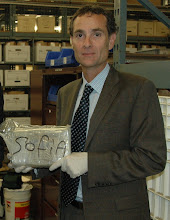
Michael Martin, 33, of El Sobrante was also sentenced Wednesday to five years of probation by U.S. District Judge Claudia Wilken in Oakland.
Martin is the owner of Tainted Inc., which started as a boutique business that made chocolate truffles and grew into a large marijuana-candy maker that bought chocolate by the ton, authorities said.
Tainted Inc. employee Jessica Sanders was sentenced Wednesday to three years' probation for illegally using a phone to distribute marijuana, a felony. Two other employees, Michael Anderson and Diallo McLinn - the son of longtime Berkeley activist Osha Neumann - were each sentenced in April to two years' probation on a misdemeanor count of marijuana possession.
Authorities said Tainted made candies with names that played off popular legal treats: Buddafinga, Mr. Greenbud, Stoners. The business also made pot-laced items such as cookies, ice cream, peanut butter, granola bars and barbecue sauce, according to the Drug Enforcement Administration.
Martin's attorneys, Sara Zalkin and J. Tony Serra, wrote in court papers that their client had been manufacturing the candy as a medicinal marijuana product. Martin, they said, "was not motivated by profit" and now has a "negative net worth of $147,000."
In a sentencing memorandum, however, Assistant U.S. Attorney Keslie Stewart wrote that Martin "was not growing marijuana solely for his own use or for the use of a sick family member. He was running a profitable business and supporting himself and his family with the proceeds of marijuana sales."
Martin said he joined the medical marijuana movement after seeing his father die painfully of prostate cancer in 2002 after a 10-year battle. His father refused to use marijuana because of a federal ban on all types of the drug, Martin said.
Martin said he uses medical marijuana to ease pain after a fall left him with seven screws and a steel plate in his left heel. He said he also has degenerative cartilage in his right knee.
In September 2007, federal agents raided his factory on the 900 block of 61st Street in North Oakland and a building on the 300 block of 40th Street where marijuana was grown.
The investigation bore similarities to DEA raids in Oakland in 2006 in which five people connected with a company called Beyond Bomb were convicted of making marijuana-laced treats with such names as Munchy Way, Rasta Reece's and Puff-a-Mint Pattie.
In federal marijuana cases, defense attorneys are barred from telling jurors that companies supply medical cannabis products through licensed dispensaries to qualified patients. Proposition 215, the initiative approved in 1996 by state voters, legalized growing and using marijuana for medical purposes with a doctor's recommendation. Under federal law, marijuana used for any purpose is illegal.
E-mail Henry K. Lee at hlee@sfchronicle.com.
http://www.sfgate.com/cgi-bin/article.cgi?f=/c/a/2008/09/05/BAGS12OSPG.DTL&feed=rss.bayarea
Friday, September 5, 2008


Pot bandits nabbed
Three men have been arrested so far. Investigators also looking into the medical marijuana dispensary they tried to rob.
By SALVADOR HERNANDEZ and LOIS EVEZICH
The Orange County Register
LAGUNA NIGUEL – Armed men searching for marijuana and cash at an office building Wednesday instead found themselves confronted by employees ready to protect their pot.
One of the office workers, instead, tackled a gun-wielding robber and wrestled his gun away.
The Orange County Sheriff's Department arrested three men in the botched heist and are now wondering how a medical marijuana dispensary has been operating unnoticed.
Three people have been arrested in connection to the robbery, and investigators have launched a parallel investigation into the legitimacy of the medical marijuana dispensary that was operating quietly at an industrial cul-de-sac in an unmarked suite, said Sgt. Andy Ferguson of the sheriff's department.
One man walked into the 27665 Forbes Road office and at least three more tried to force their way inside the locked door at about 3:30 p.m. Two of them were armed with semi-automatic weapons, Ferguson said. Two shots were fired inside during the struggle but no one was wounded.
"The best we can tell the people were there to steal the marijuana," Ferguson said.
But without prior knowledge that the plain office suite was selling marijuana, visitors to the area would have no clue of what was sold inside, Ferguson said. Potential customers had to be buzzed in from employees inside.
The business was called Gifts From God Ministries, though city officials said they didn't know a medical marijuana facility leased the space, said Tim Casey, city manager for Laguna Niguel. The city received periodic inquiries over the years about applications and permits but applicants were told the city's code prohibits such establishments.
According to city records, the space was registered by John Lana, who lists a San Clemente address. But in an Occupancy Information Form, the business description was left blank.
At about the same time Lana filed an occupancy form with the city, employees of neighboring businesses said they began to see teenagers showing up to the area and going into the dispensary.
Calls to Lana's phone number listed in city records were not returned.
A representative of Transtar Inc., the managing company of the building, said the company had no comment on the incident or Gifts From God Ministries.
Investigators with the sheriff's department are continuing the simultaneous investigations and are looking for another two suspects believed to be involved in the robbery, Ferguson said. No arrests have been made in connection with the investigation of the facility.
Arsenio Lamont Collins, 18, Miles Kroy York, 19, and Michael Jeffrey Munroe, 20, have been taken into custody on suspicion of attempted homicide, robbery, and conspiracy to commit a crime. Authorities are looking for at least two additional suspects believed to have been involved.
"We don't have the whole story," Ferguson said.
Contact the writer: shernandez@ocregister.com or 949-454-7361
http://www.ocregister.com/articles/city-marijuana-ferguson-2146513-inside-robbery
By SALVADOR HERNANDEZ and LOIS EVEZICH
The Orange County Register
LAGUNA NIGUEL – Armed men searching for marijuana and cash at an office building Wednesday instead found themselves confronted by employees ready to protect their pot.
One of the office workers, instead, tackled a gun-wielding robber and wrestled his gun away.
The Orange County Sheriff's Department arrested three men in the botched heist and are now wondering how a medical marijuana dispensary has been operating unnoticed.
Three people have been arrested in connection to the robbery, and investigators have launched a parallel investigation into the legitimacy of the medical marijuana dispensary that was operating quietly at an industrial cul-de-sac in an unmarked suite, said Sgt. Andy Ferguson of the sheriff's department.
One man walked into the 27665 Forbes Road office and at least three more tried to force their way inside the locked door at about 3:30 p.m. Two of them were armed with semi-automatic weapons, Ferguson said. Two shots were fired inside during the struggle but no one was wounded.
"The best we can tell the people were there to steal the marijuana," Ferguson said.
But without prior knowledge that the plain office suite was selling marijuana, visitors to the area would have no clue of what was sold inside, Ferguson said. Potential customers had to be buzzed in from employees inside.
The business was called Gifts From God Ministries, though city officials said they didn't know a medical marijuana facility leased the space, said Tim Casey, city manager for Laguna Niguel. The city received periodic inquiries over the years about applications and permits but applicants were told the city's code prohibits such establishments.
According to city records, the space was registered by John Lana, who lists a San Clemente address. But in an Occupancy Information Form, the business description was left blank.
At about the same time Lana filed an occupancy form with the city, employees of neighboring businesses said they began to see teenagers showing up to the area and going into the dispensary.
Calls to Lana's phone number listed in city records were not returned.
A representative of Transtar Inc., the managing company of the building, said the company had no comment on the incident or Gifts From God Ministries.
Investigators with the sheriff's department are continuing the simultaneous investigations and are looking for another two suspects believed to be involved in the robbery, Ferguson said. No arrests have been made in connection with the investigation of the facility.
Arsenio Lamont Collins, 18, Miles Kroy York, 19, and Michael Jeffrey Munroe, 20, have been taken into custody on suspicion of attempted homicide, robbery, and conspiracy to commit a crime. Authorities are looking for at least two additional suspects believed to have been involved.
"We don't have the whole story," Ferguson said.
Contact the writer: shernandez@ocregister.com or 949-454-7361
http://www.ocregister.com/articles/city-marijuana-ferguson-2146513-inside-robbery
Lake County pot grower Lepp guilty
By GLENDA ANDERSON
THE PRESS DEMOCRAT
Published: Friday, September 5, 2008 at 4:30 a.m.
A Lake County man with a penchant for pushing the boundaries of medical marijuana law has been convicted in federal court of growing nearly 25,000 pot plants in plain view along Highway 20 in Upper Lake four years ago.
Eddy Lepp, 56, was convicted Tuesday by a U.S. District Court jury of conspiracy to possess marijuana with the intent to distribute more than 1,000 marijuana plants and of cultivating more than 1,000 marijuana plants, the U.S. Attorney's Office said.
He faces between 10 years and life in prison and a maximum fine of $4 million when he's sentenced Dec. 1, said U.S. Attorney's Office spokesman Joshua Eaton.
Lepp said Thursday he would appeal the verdict.
"I truly feel I was very, very railroaded by the system, and specifically by (U.S. District) Judge Marilyn Patel," he said.
Lepp said Patel, prior to trial, had refused to allow his attorneys to defend him under the Religious Freedom Restoration Act, which is aimed at preventing laws that substantially burden a person's free exercise of religion.
Lepp, who said he is Rastafarian as well as a minister of the Universal Life Church, claimed the marijuana was grown for spiritual and religious reasons.
But Patel said the number of plants being grown created too great a risk that some of them were being diverted for nonreligious uses, he said.
When federal and Lake County Sheriff's officials raided the garden in 2004, they estimated there were more than 32,000 plants of varying sizes growing in neatly tilled rows near Highway 20 next door to a commercial strawberry patch.
Lepp and High Times magazine, a publication focused on marijuana production and laws, said it was the largest single crop of medical pot seized in the United States.
The subsequent legal battle earned Lepp a High Times 2004 Freedom Fighter of the Year Award.
More-conservative medical marijuana proponents have said they're less than thrilled by Lepp's predilection for attracting the ire of federal authorities.
Investigators estimated Lepp's 2004 crop could have been worth more than $80 million when mature.
Lepp said Thursday and at trial the plants weren't his. The marijuana was being grown cooperatively by members of his church, said Lepp, founder of Eddy's Medicinal Gardens.
"All I did was make (the land) available to the ministry," he said.
Lepp had been arrested at least twice before the 2004 raid but little came from those brushes with the law.
He's also been a high-profile promoter of marijuana legalization. He lobbied Lake County supervisors to set medical marijuana standards and smoked pot openly outside the Federal Building in Santa Rosa during a 2002 demonstration in support of medical marijuana.
Lepp said he was surprised by his conviction, which took the jury only about three hours to reach.
"We made it very clear through the course of the trial I was doing everything legally," he said.
You can reach Staff Writer Glenda Anderson at 462-6473 or glenda.anderson@pressdemocrat.com.
THE PRESS DEMOCRAT
Published: Friday, September 5, 2008 at 4:30 a.m.
A Lake County man with a penchant for pushing the boundaries of medical marijuana law has been convicted in federal court of growing nearly 25,000 pot plants in plain view along Highway 20 in Upper Lake four years ago.
Eddy Lepp, 56, was convicted Tuesday by a U.S. District Court jury of conspiracy to possess marijuana with the intent to distribute more than 1,000 marijuana plants and of cultivating more than 1,000 marijuana plants, the U.S. Attorney's Office said.
He faces between 10 years and life in prison and a maximum fine of $4 million when he's sentenced Dec. 1, said U.S. Attorney's Office spokesman Joshua Eaton.
Lepp said Thursday he would appeal the verdict.
"I truly feel I was very, very railroaded by the system, and specifically by (U.S. District) Judge Marilyn Patel," he said.
Lepp said Patel, prior to trial, had refused to allow his attorneys to defend him under the Religious Freedom Restoration Act, which is aimed at preventing laws that substantially burden a person's free exercise of religion.
Lepp, who said he is Rastafarian as well as a minister of the Universal Life Church, claimed the marijuana was grown for spiritual and religious reasons.
But Patel said the number of plants being grown created too great a risk that some of them were being diverted for nonreligious uses, he said.
When federal and Lake County Sheriff's officials raided the garden in 2004, they estimated there were more than 32,000 plants of varying sizes growing in neatly tilled rows near Highway 20 next door to a commercial strawberry patch.
Lepp and High Times magazine, a publication focused on marijuana production and laws, said it was the largest single crop of medical pot seized in the United States.
The subsequent legal battle earned Lepp a High Times 2004 Freedom Fighter of the Year Award.
More-conservative medical marijuana proponents have said they're less than thrilled by Lepp's predilection for attracting the ire of federal authorities.
Investigators estimated Lepp's 2004 crop could have been worth more than $80 million when mature.
Lepp said Thursday and at trial the plants weren't his. The marijuana was being grown cooperatively by members of his church, said Lepp, founder of Eddy's Medicinal Gardens.
"All I did was make (the land) available to the ministry," he said.
Lepp had been arrested at least twice before the 2004 raid but little came from those brushes with the law.
He's also been a high-profile promoter of marijuana legalization. He lobbied Lake County supervisors to set medical marijuana standards and smoked pot openly outside the Federal Building in Santa Rosa during a 2002 demonstration in support of medical marijuana.
Lepp said he was surprised by his conviction, which took the jury only about three hours to reach.
"We made it very clear through the course of the trial I was doing everything legally," he said.
You can reach Staff Writer Glenda Anderson at 462-6473 or glenda.anderson@pressdemocrat.com.
Curry: Support Proposition 5
Written by Rebecca Curry
Friday, 05 September 2008
This year voters will be asked to approve a substantial reform of California's overwhelmed criminal justice system.
The Nonviolent Offender Rehabilitation Act (NORA), Proposition 5 on the November ballot, will change the way the state treats nonviolent offenders.
It will implement reforms repeatedly recommended by experts over several decades and will finally address the role that addiction and mental illness play in driving our incarceration and recidivism rates.
Proposition 5 builds upon the successful drug treatment programs created by voter-approved Proposition 36 (November 2000).
California currently offers virtually no publicly funded substance abuse treatment options for youth under the age of 18. This tragic and short-sighted failure abandons young people to their drug problems, putting their safety, their physical and mental health, and their futures at risk. Families, too often, have nowhere to turn for help. NORA would fund the creation of a system of care for non-criminally involved young people with drug problems.
NORA commits about $65 million per year to drug treatment and other support programs for youth, funding the creation of a system of care for young people under the age of 18 where no system exists now. Additional money for youth treatment would come from fines paid for low-level marijuana possession offenses.
By expanding rehabilitation behind bars, providing more re-entry services to nonviolent offenders on parole and expanding access to treatment, instead of incarceration, for nonviolent low-level drug offenders, NORA would significantly reduce recidivism and support parolee reintegration into the community.
NORA expands the diversion of nonviolent offenders to addiction treatment. NORA provides rehabilitation programs to nonviolent prisoners and parolees, and prevents them from being returned to prison for minor violations. NORA motivates participants to complete treatment and rehabilitation through an appropriate mix of incentives, rewards, sanctions and consequences.
NORA creates a unified system of care and provides $385 million per year to pay for drug treatment and related costs. Nonviolent drug offenders would be placed in one of three different levels of care and supervision, based on their criminal history and drug problem severity. Participants who fail at the lower levels could be moved up to the more intensive levels, or could be jailed for noncompliance. Completing the prescribed course of treatment can lead to the participants' drug offense being dropped from his or her criminal record.
It provides for prison system and parole reforms. NORA makes rehabilitation a real priority for the Department of Corrections and Rehabilitation, while limiting the use of prison beds to punish minor parole violations by nonviolent offenders. An independent oversight panel would have authority over major aspects of the implementation of NORA.
Because NORA would sharply limit the incarceration of nonviolent offenders, the nonpartisan Legislative Analyst's Office projects that the measure would save California $1 billion or more each year in prison and parole costs. Much of the annual savings would be used instead to pay for the measure's new treatment and rehabilitation programs. According to the Legislative Analyst's Office, the state would see additional net savings of $2.5 billion over several years as prison-construction costs would be reduced by NORA's reforms.
Lake County Democrats and the Democratic Party of California urge a "yes" vote on Propostion 5.
In this time of budget crisis, California cannot afford to continue "churning" nonviolent offenders without reducing recidivism. NORA would reallocate funding to make rehabilitation and drug treatment a priority.
The "Yes" campaign's Web site is www.prop5yes.com.
The Nonviolent Offender Rehabilitation Act offers common-sense solutions to California's prison overcrowding crisis.
Rebecca Curry lives in Kelseyville.
http://lakeconews.com/content/view/5521/772/
Friday, 05 September 2008
This year voters will be asked to approve a substantial reform of California's overwhelmed criminal justice system.
The Nonviolent Offender Rehabilitation Act (NORA), Proposition 5 on the November ballot, will change the way the state treats nonviolent offenders.
It will implement reforms repeatedly recommended by experts over several decades and will finally address the role that addiction and mental illness play in driving our incarceration and recidivism rates.
Proposition 5 builds upon the successful drug treatment programs created by voter-approved Proposition 36 (November 2000).
California currently offers virtually no publicly funded substance abuse treatment options for youth under the age of 18. This tragic and short-sighted failure abandons young people to their drug problems, putting their safety, their physical and mental health, and their futures at risk. Families, too often, have nowhere to turn for help. NORA would fund the creation of a system of care for non-criminally involved young people with drug problems.
NORA commits about $65 million per year to drug treatment and other support programs for youth, funding the creation of a system of care for young people under the age of 18 where no system exists now. Additional money for youth treatment would come from fines paid for low-level marijuana possession offenses.
By expanding rehabilitation behind bars, providing more re-entry services to nonviolent offenders on parole and expanding access to treatment, instead of incarceration, for nonviolent low-level drug offenders, NORA would significantly reduce recidivism and support parolee reintegration into the community.
NORA expands the diversion of nonviolent offenders to addiction treatment. NORA provides rehabilitation programs to nonviolent prisoners and parolees, and prevents them from being returned to prison for minor violations. NORA motivates participants to complete treatment and rehabilitation through an appropriate mix of incentives, rewards, sanctions and consequences.
NORA creates a unified system of care and provides $385 million per year to pay for drug treatment and related costs. Nonviolent drug offenders would be placed in one of three different levels of care and supervision, based on their criminal history and drug problem severity. Participants who fail at the lower levels could be moved up to the more intensive levels, or could be jailed for noncompliance. Completing the prescribed course of treatment can lead to the participants' drug offense being dropped from his or her criminal record.
It provides for prison system and parole reforms. NORA makes rehabilitation a real priority for the Department of Corrections and Rehabilitation, while limiting the use of prison beds to punish minor parole violations by nonviolent offenders. An independent oversight panel would have authority over major aspects of the implementation of NORA.
Because NORA would sharply limit the incarceration of nonviolent offenders, the nonpartisan Legislative Analyst's Office projects that the measure would save California $1 billion or more each year in prison and parole costs. Much of the annual savings would be used instead to pay for the measure's new treatment and rehabilitation programs. According to the Legislative Analyst's Office, the state would see additional net savings of $2.5 billion over several years as prison-construction costs would be reduced by NORA's reforms.
Lake County Democrats and the Democratic Party of California urge a "yes" vote on Propostion 5.
In this time of budget crisis, California cannot afford to continue "churning" nonviolent offenders without reducing recidivism. NORA would reallocate funding to make rehabilitation and drug treatment a priority.
The "Yes" campaign's Web site is www.prop5yes.com.
The Nonviolent Offender Rehabilitation Act offers common-sense solutions to California's prison overcrowding crisis.
Rebecca Curry lives in Kelseyville.
http://lakeconews.com/content/view/5521/772/
Medical Marijuana's Eco Boomtown
Humbolt Country's High: How One Community Thrives on Legal Pot
By MARY SPICUZZA
PHOTO: http://a.abcnews.com/images/Business/ht_martha_peace_080904_mn.jpg
Long-time local activist Martha Devine, also known as "Granny Green Genes," says that the economy of Humboldt County "would have ceased to exist a long time ago without it. This county was built on marijuana."
(Mary Spicuzza/ABC)
ARCATA, Calif., Sept. 5, 2008 — When Stephen Gasparas arrived in Humboldt County in late 2004, he was driving a VW Westfalia pop-top camper on the verge of breaking down and had only $100 in his pocket.
Gasparas, who ran a flooring business in Chicago before heading west, seems to have found far greener pastures in Humboldt County's medical marijuana industry.
Less than four years later, the owner of the Arcata iCenter, a collective marijuana dispensary, is now driving a new hybrid Toyota Highlander and bringing in about $100,000 a year. (And judging by the foot traffic in and out of the iCenter, that figure is a modest estimate.)
But Gasparas, 38, is just one of many in Humboldt County and throughout California benefiting from the booming medical marijuana industry.
Exactly how much the Golden State has made in pot profits is a hazy figure, mostly because California doesn't keep exact numbers on medical marijuana sales taxes.
It's estimated that $143 million in medical marijuana sales have netted $11.4 million in state and local taxes annually, based on registered businesses, California State Board of Equalization spokesperson Anita Gore said. And those estimates are small compared to a 2006 report co-authored by California NORML state coordinator Dale Gieringer, which said that Californians consumed between $870 million and $2 billion worth of medical marijuana per year.
Of course, marijuana is nothing new to Humboldt County.
Humboldt, part of Northern California's Emerald Triangle, has long been known for its high-grade marijuana crop, which has been immortalized on merchandise including "Got Humboldt?" T-shirts, skateboards that feature weed and the words "Humboldt Gold," and an upcoming movie named -- what else? -- "Humboldt County." One recent study by Steven Hackett, an economics professor at Humboldt State University, estimated marijuana brings in as much as a half-billion dollars to the county's economy.
Those who think Hackett's number is much too high probably have not wandered through the streets of cities like Arcata, enjoying the sights -- and scents -- of Humboldt.
At the recent I-Block Party, a fundraiser for Arcata's sister city (Camoapa, Nicaragua), the heavy scent of pot hung in the warm air as the crowd grooved to a reggae band.
Humboldt Glassblowers, a local shop featuring work by local artists, offers a seemingly endless supply of gorgeous swirled glass pipes -- not to mention hookahs, Frisbees and magazines like "High Times" and "420 Magazine." There, it seemed hard to go anywhere without smelling ganga, or at least spotting some reference to it.
For years, Humboldt County has enjoyed the benefits of a booming underground economy. But changes to state laws -- such as the passage of Proposition 215 in 1996, when voters approved the medical use of marijuana -- mean that many engaged in cultivation and sales are trying to follow state medical marijuana laws. Or, at least some of them are making an effort, and in doing so are pouring money into local and state tax coffers.
The City of Arcata declined to disclose specific taxes paid on medical marijuana sales by local businesses, calling that "proprietary information." But the city's finance director, Janet Luzzi, said one dispensary in town is among Arcata's top 25 producers of sales tax, and has been for several quarters.
"It's not always there," Luzzi said. "But it's often there."
Other medical marijuana dispensaries, however, recently received written reminders from Luzzi.
"Not all of them were paying taxes," she said.
And taxes aside, most here acknowledge marijuana sales have for years contributed to county finances.
Vocal medical marijuana advocate Martha Devine was sitting on a park bench in the flower-lined Arcata Plaza, near a large circle of people kicking around a hacky sack and dozens of dancers. A steel drum band was playing for an enthusiastic crowd, and shoppers were wandering in and out of stores.
"The economy of Humboldt County would have ceased to exist a long time ago without it," said Devine, glancing around the plaza. "This county was built on marijuana."
Devine, who's known to some here as "Granny Green Genes," said this place was a ghost town when she arrived in Humboldt 32 years ago. She's witnessed the decline of the county's other traditional industries, like timber and fisheries, and believes marijuana is largely responsible for Humboldt's progressive culture and thriving businesses.
"I think it's really kept our economy going," Devine said.
While Devine acknowledged that Humboldt's cannabis cash crop has brought in the bad with the good -- things like harder drugs and guns -- she said she hopes medical marijuana will help the industry fight the negative aspects associated with black (or even gray) market economies.
She said she does not have a medical marijuana I.D. card "at the present time," but believes many ill members of the community have benefited tremendously from their "medicine."
Despite widespread support for medical marijuana, tensions seem especially high in towns like Arcata, where people are struggling to agree on the details of medical marijuana, such as rules for growing and limits for medical marijuana possession.
It's a debate that's playing out in counties around California, from historically pot-friendly places like Mendocino County to Los Angeles.
The City of Arcata recently was reviewing the standards of its own marijuana guidelines when the new guidelines by the California Attorney General's Office were issued late last month.
City staff members are currently reviewing the new statewide guidelines, which set clearer policies on medical marijuana identification cards, plant limits and mandate that dispensaries operate as collectives or cooperatives. Arcata hopes to soon send guidelines to the City Council for its approval.
But whether the new state and local guidelines can help bring peace to Humboldt remains to be seen. In the meantime, many local residents seem uncomfortable in their current position, caught between conflicting and confusing state and federal laws, where medical marijuana dispensaries that pay their state and local taxes may be raided at any time by the Drug Enforcement Administration or other federal agencies.
Some residents complain that a few grow houses have grown out of control, causing problems ranging from skunk-like odors to house fires.
So, even as California's attorney general seems comfortable delving into the medical marijuana debate, stores like Humboldt Hydroponics refuse to even discuss the topic.
When asked about the issue of medical marijuana and the economy, a man behind the counter of Humboldt Hydroponics shop in Arcata seemed on edge as he immediately insisted he had nothing to say because his shop had "no affiliation" with medical marijuana.
But while standing outside his Arcata iCenter dispensary, Stephen Gasparas seemed to be making a sincere effort to bring medical marijuana out of the shadows and celebrate its contributions to California's economy. He warmly greeted many of the patients -- many of them 20- or 30-something guys -- who stopped in the business.
Gasparas, who had battled over permit issues at previous business he ran a few doors down from his medical marijuana dispensary, talked about his efforts to pay sales taxes and give back to the community. He talked about his new fire relief fund. And when an employee came outside to ask him about a patient's form, Gasparas insisted that personal contact must be made with each doctor who's suggested a patient try medical marijuana.
"I'm here seven days a week," he said. "I wouldn't screw around."
http://abcnews.go.com/Business/story?id=5727836&page=1
By MARY SPICUZZA
PHOTO: http://a.abcnews.com/images/Business/ht_martha_peace_080904_mn.jpg
Long-time local activist Martha Devine, also known as "Granny Green Genes," says that the economy of Humboldt County "would have ceased to exist a long time ago without it. This county was built on marijuana."
(Mary Spicuzza/ABC)
ARCATA, Calif., Sept. 5, 2008 — When Stephen Gasparas arrived in Humboldt County in late 2004, he was driving a VW Westfalia pop-top camper on the verge of breaking down and had only $100 in his pocket.
Gasparas, who ran a flooring business in Chicago before heading west, seems to have found far greener pastures in Humboldt County's medical marijuana industry.
Less than four years later, the owner of the Arcata iCenter, a collective marijuana dispensary, is now driving a new hybrid Toyota Highlander and bringing in about $100,000 a year. (And judging by the foot traffic in and out of the iCenter, that figure is a modest estimate.)
But Gasparas, 38, is just one of many in Humboldt County and throughout California benefiting from the booming medical marijuana industry.
Exactly how much the Golden State has made in pot profits is a hazy figure, mostly because California doesn't keep exact numbers on medical marijuana sales taxes.
It's estimated that $143 million in medical marijuana sales have netted $11.4 million in state and local taxes annually, based on registered businesses, California State Board of Equalization spokesperson Anita Gore said. And those estimates are small compared to a 2006 report co-authored by California NORML state coordinator Dale Gieringer, which said that Californians consumed between $870 million and $2 billion worth of medical marijuana per year.
Of course, marijuana is nothing new to Humboldt County.
Humboldt, part of Northern California's Emerald Triangle, has long been known for its high-grade marijuana crop, which has been immortalized on merchandise including "Got Humboldt?" T-shirts, skateboards that feature weed and the words "Humboldt Gold," and an upcoming movie named -- what else? -- "Humboldt County." One recent study by Steven Hackett, an economics professor at Humboldt State University, estimated marijuana brings in as much as a half-billion dollars to the county's economy.
Those who think Hackett's number is much too high probably have not wandered through the streets of cities like Arcata, enjoying the sights -- and scents -- of Humboldt.
At the recent I-Block Party, a fundraiser for Arcata's sister city (Camoapa, Nicaragua), the heavy scent of pot hung in the warm air as the crowd grooved to a reggae band.
Humboldt Glassblowers, a local shop featuring work by local artists, offers a seemingly endless supply of gorgeous swirled glass pipes -- not to mention hookahs, Frisbees and magazines like "High Times" and "420 Magazine." There, it seemed hard to go anywhere without smelling ganga, or at least spotting some reference to it.
For years, Humboldt County has enjoyed the benefits of a booming underground economy. But changes to state laws -- such as the passage of Proposition 215 in 1996, when voters approved the medical use of marijuana -- mean that many engaged in cultivation and sales are trying to follow state medical marijuana laws. Or, at least some of them are making an effort, and in doing so are pouring money into local and state tax coffers.
The City of Arcata declined to disclose specific taxes paid on medical marijuana sales by local businesses, calling that "proprietary information." But the city's finance director, Janet Luzzi, said one dispensary in town is among Arcata's top 25 producers of sales tax, and has been for several quarters.
"It's not always there," Luzzi said. "But it's often there."
Other medical marijuana dispensaries, however, recently received written reminders from Luzzi.
"Not all of them were paying taxes," she said.
And taxes aside, most here acknowledge marijuana sales have for years contributed to county finances.
Vocal medical marijuana advocate Martha Devine was sitting on a park bench in the flower-lined Arcata Plaza, near a large circle of people kicking around a hacky sack and dozens of dancers. A steel drum band was playing for an enthusiastic crowd, and shoppers were wandering in and out of stores.
"The economy of Humboldt County would have ceased to exist a long time ago without it," said Devine, glancing around the plaza. "This county was built on marijuana."
Devine, who's known to some here as "Granny Green Genes," said this place was a ghost town when she arrived in Humboldt 32 years ago. She's witnessed the decline of the county's other traditional industries, like timber and fisheries, and believes marijuana is largely responsible for Humboldt's progressive culture and thriving businesses.
"I think it's really kept our economy going," Devine said.
While Devine acknowledged that Humboldt's cannabis cash crop has brought in the bad with the good -- things like harder drugs and guns -- she said she hopes medical marijuana will help the industry fight the negative aspects associated with black (or even gray) market economies.
She said she does not have a medical marijuana I.D. card "at the present time," but believes many ill members of the community have benefited tremendously from their "medicine."
Despite widespread support for medical marijuana, tensions seem especially high in towns like Arcata, where people are struggling to agree on the details of medical marijuana, such as rules for growing and limits for medical marijuana possession.
It's a debate that's playing out in counties around California, from historically pot-friendly places like Mendocino County to Los Angeles.
The City of Arcata recently was reviewing the standards of its own marijuana guidelines when the new guidelines by the California Attorney General's Office were issued late last month.
City staff members are currently reviewing the new statewide guidelines, which set clearer policies on medical marijuana identification cards, plant limits and mandate that dispensaries operate as collectives or cooperatives. Arcata hopes to soon send guidelines to the City Council for its approval.
But whether the new state and local guidelines can help bring peace to Humboldt remains to be seen. In the meantime, many local residents seem uncomfortable in their current position, caught between conflicting and confusing state and federal laws, where medical marijuana dispensaries that pay their state and local taxes may be raided at any time by the Drug Enforcement Administration or other federal agencies.
Some residents complain that a few grow houses have grown out of control, causing problems ranging from skunk-like odors to house fires.
So, even as California's attorney general seems comfortable delving into the medical marijuana debate, stores like Humboldt Hydroponics refuse to even discuss the topic.
When asked about the issue of medical marijuana and the economy, a man behind the counter of Humboldt Hydroponics shop in Arcata seemed on edge as he immediately insisted he had nothing to say because his shop had "no affiliation" with medical marijuana.
But while standing outside his Arcata iCenter dispensary, Stephen Gasparas seemed to be making a sincere effort to bring medical marijuana out of the shadows and celebrate its contributions to California's economy. He warmly greeted many of the patients -- many of them 20- or 30-something guys -- who stopped in the business.
Gasparas, who had battled over permit issues at previous business he ran a few doors down from his medical marijuana dispensary, talked about his efforts to pay sales taxes and give back to the community. He talked about his new fire relief fund. And when an employee came outside to ask him about a patient's form, Gasparas insisted that personal contact must be made with each doctor who's suggested a patient try medical marijuana.
"I'm here seven days a week," he said. "I wouldn't screw around."
http://abcnews.go.com/Business/story?id=5727836&page=1
What if the U.S. legalized all drugs?
How does a $50 billion boost to the U.S. economy sound? Not bad? Well, what about all the new addicts that could pop up on the streets? Theoretically, it's all possible.
By Shirley Skeel
September 04, 2008
Every year, about two million people in the U.S. are arrested for drug offenses, including using or selling marijuana, heroin, cocaine or methamphetamine. About a third of America's prisoners are held on drug charges or for crimes attributed to drug abuse.
But what if all street drugs were legalized?
More kids would decide to try drugs "just once," and more would get hooked. Some lives would be ruined. But other lives would be saved. Gang murders would fall sharply. Thousands of people now in jail would be free to find work and feed their families. We'd save billions on the war on drugs, and a new drug industry would create jobs and loads of taxable revenue.
Of course, it may sound like madness. And the gut feeling among many people is that it would be disastrous.
Don Semesky, the former chief of financial operations for the Drug Enforcement Administration in Washington, D.C., asks: "Have you ever seen a meth addict, with all those sores and rotten teeth? And what they do to their kids? Do you want the (U.S.) government to be responsible for that?"
Yet some economists, including American Nobel laureate Milton Friedman, have supported the idea of legalizing drugs. Friedman believed America's war on drugs was at the root of police corruption and caused thousands of unnecessary deaths, with few gains for ordinary citizens.
So just how would legalized drugs affect the U.S. economy and Americans' standard of life?
Running some numbers
Let's look at two scenarios: if marijuana alone were legalized and if all street drugs were legalized. Either way, assume there'd be strict regulation similar to that for alcohol and cigarettes, including age limits, licensing, quality control, high taxes and limits on advertising.
At first glance, on a "strictly numbers" basis, the effect on America's pocketbook looks promising. It's possible to see:
* Savings on drug-related law enforcement -- FBI, police, courts and prisons -- of $2 billion to $10 billion a year if marijuana were legalized, based on various estimates, or up to $40 billion a year if all drugs were legalized, based on enforcement costs from the White House's Office of National Drug Control Policy. That's before the cost of overseeing the new drug regulations.
* Increased productivity as fewer people were murdered, drug offenders were freed to find work and those stripped of their criminal record found it easier to get jobs (including running drug boutiques). However, how many of those now in prison would turn away from crime is unknown.
* Tax gains. Drug prices would have to fall sharply in order to squeeze out the black market. Still, Jeffrey Miron, a senior lecturer in economics for Harvard University, calculates the $10 billion-plus U.S. marijuana market could reap $6 billion in annual taxes. The $65 billion market for all illicit drugs, he estimates, might bring in $10 billion to $15 billion in taxes.
* A new legal drug industry would create jobs, farm crops, retail outlets and a tiny notch up in gross domestic product as the black market money turned clean. A 1994 study by the U.S. National Organization for the Reform of Marijuana Laws in Washington, D.C., suggested 100,000 jobs and 60,000 retailers could emerge from a legal marijuana industry.
So, seemingly there'd be a shower of money for American government coffers -- perhaps an initial $50 billion under the "all drugs" scenario -- and gains for business and the community. But at what cost?
The answer is that it all depends, mostly on how many more people would use drugs, which drugs and how much more they used.
Give me a latte and a joint
Currently, considering it can get you arrested (or kill you), drug use is surprisingly common. A 2006 U.S. government study said 20% of Americans 18 to 25 had taken an illicit drug in the month prior to the survey.
So what if a Starbucks-style chain of drugstores that fulfilled Abbie Hoffman's wildest dreams opened across the U.S.? What if one could sit on a sofa, pick up a magazine and light up, or even shoot up, in a congenial atmosphere?
Europe offers some clues. In 1976, the Netherlands decided to tolerate (though not legalize) the selling of small amounts of cannabis in licensed coffee shops. At first there was little change in usage. But between 1984 and 1992, as shops opened rapidly, smoking of the drug doubled among Dutch 18- to 20-year-olds.
"In that case, it looked like changing the legal status was of minor importance, but opening commercial outlets mattered," says Mark Kleiman, the director of the Drug Policy Analysis Program at the University of California, Los Angeles.
Moreover, what if drugs were glamorously promoted via YouTube or Facebook, or even big business? Peter Reuter, a professor of public policy and criminology at the University of Maryland, says it would be hard to block advertising because there's little proof that marijuana is harmful.
"I think we'd see a fair amount of promotion," he says. "Then you could have large increases in use."
Kleiman adds, "Imagine what Philip Morris and MillerCoors could do if we gave them cannabis to work with."
Would addiction increase?
One oddity that stands out in the research is that the Dutch are still only midrange users of marijuana by European standards. By some measures, they use marijuana far less than Americans, according to a recent World Health Organization survey.
It's thought that this is due to differing social norms, which raises another point. If drugs were legal in America, this could send a powerful signal to kids that drugs are OK. Add this to the lower price, addictive effects of some drugs and easy access, and drug use could rise quite a bit. To offset this, we could run campaigns warning against the stuff. That might work. It might not.
The response from marijuana reform advocates is: "So what if use increases? It's harmless anyway." However, that remains unproved. Researchers worry about the high tar content, the risk of personal injury while someone is "high" and about any effects on students' work.
As for legalizing all drugs, Harvard's Miron argues that the increase in drug abuse would likely be small. "Millions of people don't smoke cigarettes. The same is true of alcohol . . . because they know that too much of it is not good for you," he says. People who are prone to abuse drugs are probably already abusing them, he adds.
That's hardly so, Reuter argues. Heroin and cocaine "are attractive drugs," he says. "Lots of kids would experiment, and maybe 3 or 4% would become dependent. So the increase in addiction might be very substantial."
The added costs
Whichever case proved true, there could be extra costs to U.S. taxpayers for abusers' medical treatment, family support, petty crime and lost worker productivity.
Just how much is hard to say. And how these negative economic effects might net out against the positive effects is virtually impossible to say. Data on drug-use behaviour are thin and often contradictory.
Semesky says, "Nobody is going to be better off." The Office of National Drug Control Policy puts the cost of drug abuse at $145 billion, including medical expenses and lost productivity. That's more than the cost of cancer. If drugs were legal, some of these costs would rise, some would fall. Semesky believes the net effect would be highly negative.
Miron says a small rise in drug abuse would be far outweighed by the gains from reduced violent crime, freed-up police resources, a more productive citizenry and reduced illness from bad drugs and dirty needles.
Rosalie Pacula, the director of the Rand Drug Policy Research Center in Santa Monica, Calif., says there are huge unknowns. But if you look at the effects of alcohol and tobacco abuse, she says, legalizing drugs would be "very, very risky."
Could this happen?
How likely is it that street drugs would be legalized?
The possession of small amounts of marijuana has been decriminalized in 12 U.S. states, meaning offenders might get fined but won't be jailed or given a criminal record. Nonetheless, full legalization of marijuana is hardly likely. In a 2002 CNN/Time Magazine poll, 59% of respondents opposed legalizing marijuana, and 34% favoured it. Although attitudes are getting more liberal, marijuana is not legal anywhere in the world.
As for other street drugs, don't even ask. The question of legalization is no more than an interesting academic exercise.
http://finance.sympatico.msn.ca/investing/insight/article.aspx?cp-documentID=10008372
By Shirley Skeel
September 04, 2008
Every year, about two million people in the U.S. are arrested for drug offenses, including using or selling marijuana, heroin, cocaine or methamphetamine. About a third of America's prisoners are held on drug charges or for crimes attributed to drug abuse.
But what if all street drugs were legalized?
More kids would decide to try drugs "just once," and more would get hooked. Some lives would be ruined. But other lives would be saved. Gang murders would fall sharply. Thousands of people now in jail would be free to find work and feed their families. We'd save billions on the war on drugs, and a new drug industry would create jobs and loads of taxable revenue.
Of course, it may sound like madness. And the gut feeling among many people is that it would be disastrous.
Don Semesky, the former chief of financial operations for the Drug Enforcement Administration in Washington, D.C., asks: "Have you ever seen a meth addict, with all those sores and rotten teeth? And what they do to their kids? Do you want the (U.S.) government to be responsible for that?"
Yet some economists, including American Nobel laureate Milton Friedman, have supported the idea of legalizing drugs. Friedman believed America's war on drugs was at the root of police corruption and caused thousands of unnecessary deaths, with few gains for ordinary citizens.
So just how would legalized drugs affect the U.S. economy and Americans' standard of life?
Running some numbers
Let's look at two scenarios: if marijuana alone were legalized and if all street drugs were legalized. Either way, assume there'd be strict regulation similar to that for alcohol and cigarettes, including age limits, licensing, quality control, high taxes and limits on advertising.
At first glance, on a "strictly numbers" basis, the effect on America's pocketbook looks promising. It's possible to see:
* Savings on drug-related law enforcement -- FBI, police, courts and prisons -- of $2 billion to $10 billion a year if marijuana were legalized, based on various estimates, or up to $40 billion a year if all drugs were legalized, based on enforcement costs from the White House's Office of National Drug Control Policy. That's before the cost of overseeing the new drug regulations.
* Increased productivity as fewer people were murdered, drug offenders were freed to find work and those stripped of their criminal record found it easier to get jobs (including running drug boutiques). However, how many of those now in prison would turn away from crime is unknown.
* Tax gains. Drug prices would have to fall sharply in order to squeeze out the black market. Still, Jeffrey Miron, a senior lecturer in economics for Harvard University, calculates the $10 billion-plus U.S. marijuana market could reap $6 billion in annual taxes. The $65 billion market for all illicit drugs, he estimates, might bring in $10 billion to $15 billion in taxes.
* A new legal drug industry would create jobs, farm crops, retail outlets and a tiny notch up in gross domestic product as the black market money turned clean. A 1994 study by the U.S. National Organization for the Reform of Marijuana Laws in Washington, D.C., suggested 100,000 jobs and 60,000 retailers could emerge from a legal marijuana industry.
So, seemingly there'd be a shower of money for American government coffers -- perhaps an initial $50 billion under the "all drugs" scenario -- and gains for business and the community. But at what cost?
The answer is that it all depends, mostly on how many more people would use drugs, which drugs and how much more they used.
Give me a latte and a joint
Currently, considering it can get you arrested (or kill you), drug use is surprisingly common. A 2006 U.S. government study said 20% of Americans 18 to 25 had taken an illicit drug in the month prior to the survey.
So what if a Starbucks-style chain of drugstores that fulfilled Abbie Hoffman's wildest dreams opened across the U.S.? What if one could sit on a sofa, pick up a magazine and light up, or even shoot up, in a congenial atmosphere?
Europe offers some clues. In 1976, the Netherlands decided to tolerate (though not legalize) the selling of small amounts of cannabis in licensed coffee shops. At first there was little change in usage. But between 1984 and 1992, as shops opened rapidly, smoking of the drug doubled among Dutch 18- to 20-year-olds.
"In that case, it looked like changing the legal status was of minor importance, but opening commercial outlets mattered," says Mark Kleiman, the director of the Drug Policy Analysis Program at the University of California, Los Angeles.
Moreover, what if drugs were glamorously promoted via YouTube or Facebook, or even big business? Peter Reuter, a professor of public policy and criminology at the University of Maryland, says it would be hard to block advertising because there's little proof that marijuana is harmful.
"I think we'd see a fair amount of promotion," he says. "Then you could have large increases in use."
Kleiman adds, "Imagine what Philip Morris and MillerCoors could do if we gave them cannabis to work with."
Would addiction increase?
One oddity that stands out in the research is that the Dutch are still only midrange users of marijuana by European standards. By some measures, they use marijuana far less than Americans, according to a recent World Health Organization survey.
It's thought that this is due to differing social norms, which raises another point. If drugs were legal in America, this could send a powerful signal to kids that drugs are OK. Add this to the lower price, addictive effects of some drugs and easy access, and drug use could rise quite a bit. To offset this, we could run campaigns warning against the stuff. That might work. It might not.
The response from marijuana reform advocates is: "So what if use increases? It's harmless anyway." However, that remains unproved. Researchers worry about the high tar content, the risk of personal injury while someone is "high" and about any effects on students' work.
As for legalizing all drugs, Harvard's Miron argues that the increase in drug abuse would likely be small. "Millions of people don't smoke cigarettes. The same is true of alcohol . . . because they know that too much of it is not good for you," he says. People who are prone to abuse drugs are probably already abusing them, he adds.
That's hardly so, Reuter argues. Heroin and cocaine "are attractive drugs," he says. "Lots of kids would experiment, and maybe 3 or 4% would become dependent. So the increase in addiction might be very substantial."
The added costs
Whichever case proved true, there could be extra costs to U.S. taxpayers for abusers' medical treatment, family support, petty crime and lost worker productivity.
Just how much is hard to say. And how these negative economic effects might net out against the positive effects is virtually impossible to say. Data on drug-use behaviour are thin and often contradictory.
Semesky says, "Nobody is going to be better off." The Office of National Drug Control Policy puts the cost of drug abuse at $145 billion, including medical expenses and lost productivity. That's more than the cost of cancer. If drugs were legal, some of these costs would rise, some would fall. Semesky believes the net effect would be highly negative.
Miron says a small rise in drug abuse would be far outweighed by the gains from reduced violent crime, freed-up police resources, a more productive citizenry and reduced illness from bad drugs and dirty needles.
Rosalie Pacula, the director of the Rand Drug Policy Research Center in Santa Monica, Calif., says there are huge unknowns. But if you look at the effects of alcohol and tobacco abuse, she says, legalizing drugs would be "very, very risky."
Could this happen?
How likely is it that street drugs would be legalized?
The possession of small amounts of marijuana has been decriminalized in 12 U.S. states, meaning offenders might get fined but won't be jailed or given a criminal record. Nonetheless, full legalization of marijuana is hardly likely. In a 2002 CNN/Time Magazine poll, 59% of respondents opposed legalizing marijuana, and 34% favoured it. Although attitudes are getting more liberal, marijuana is not legal anywhere in the world.
As for other street drugs, don't even ask. The question of legalization is no more than an interesting academic exercise.
http://finance.sympatico.msn.ca/investing/insight/article.aspx?cp-documentID=10008372
Hemp Food Week highlights seed's versatility in cooking
By CHELSI MOY of the Missoulian
PHOTO: http://www.missoulian.com/content/articles/2008/09/05/news/local/znews03.jpg
Biga Pizza chef and owner Bob Marshall displays a slice of his hemp speciality pizza fresh out of the oven Wednesday afternoon. Marshall whipped up a hemp spread that he put on the pizza after baking as part of Hemp Food Week, an event for local chefs to use hemp in cooking. Photo by KURT WILSON/Missoulian
This little seed can be roasted, toasted, fried, frozen, poured, stored and baked.
When it comes to hemp - and the seeds it produces - the possibilities are endless. And that's no hallucination.
This week, local Missoula business owners tested the limits of hemp seeds in various culinary delights, from hemp milk lattes, to pizza and breakfast muffins. Highlighting the high-nutrition ingredient at local eateries is all part of Hemp Food Week, an event building up to this weekend's 13th annual Hempfest at Caras Park.
The fundraiser by the Montana Hemp Council aims to increase awareness of the versatility of hemp, which is harvested for paper, fiber, food and fuel.
Although hemp and marijuana come from the same type of plant, they are different varieties. Hemp contains less than 1 percent of the ingredient that makes pot users "high." Still, neither is legal to grow in the United States.
"(Hemp) has 25,000 uses," said Andrea Behunin of the Montana Hemp Council. "It's not marijuana. You're not going to get high from it. It is good for you."
Hemp seeds remind Bob Marshall, owner of Biga Pizza in downtown Missoula, of sesame seeds. Or more specifically, tahini, which is made from sesame seeds and used to make hummus.
That was his inspiration when creating this week's pizza special. Using coconut milk, brown sugar and Montola oil, and hemp seeds, of course, Marshall created a spread similar to a Thai peanut sauce. Throw that on top of a pizza full of classic food combinations, like peppers, roasted eggplant, olive oil and mozzarella, and you have a perfect example of well-balanced hemp meal.
"It tastes like a Thai curry bowl," he said
Biga Pizza began serving the hemp specialty Wednesday evening and will continue to do so through Sunday.
Nearby, at Front Street Pasta & Wraps, owner Jana Jackson substituted hemp seeds in her lemon and poppyseed muffins. During this weekend's events, the eatery will also sprinkle hemp seeds on top of the stir fry.
"Hemp seed is really good for you," she said.
Jackson compares hemp seeds to sunflower seeds. They are small and salty.
At the Good Food Store, the special is hemp milk lattes. The Red Bird is going to prepare their bread using hemp seeds and use it in one or two appetizer specials.
Neither Marshall nor Jackson typically use hemp seeds when cooking.
Jackson doesn't usually bake breakfast muffins, as the restaurant focuses on lunch and dinner. Marshall doesn't use hemp seed because he considers his pizzeria a traditional Italian-style eatery and hemp seeds fall outside that realm.
So why did they agree to participate in Hemp Food Week?
"It's a viable commodity that grows like weeds, with minimal environmental impact," Marshall said. "Renewable, sustainable products are good. It can save us."
Hempfest Saturday
The 13th annual Missoula Hempfest is Saturday, noon-10:30 p.m., at Caras Park. Features include speakers, a fashion show and live music by Eric Solomon, and special musical guests the iNHUMANS, Miller Creek, MudSlide Charley, Secret Powers and Jessica Kilroy.
http://www.missoulian.com/articles/2008/09/05/news/local/znews03.txt
__._,_.___
PHOTO: http://www.missoulian.com/content/articles/2008/09/05/news/local/znews03.jpg
Biga Pizza chef and owner Bob Marshall displays a slice of his hemp speciality pizza fresh out of the oven Wednesday afternoon. Marshall whipped up a hemp spread that he put on the pizza after baking as part of Hemp Food Week, an event for local chefs to use hemp in cooking. Photo by KURT WILSON/Missoulian
This little seed can be roasted, toasted, fried, frozen, poured, stored and baked.
When it comes to hemp - and the seeds it produces - the possibilities are endless. And that's no hallucination.
This week, local Missoula business owners tested the limits of hemp seeds in various culinary delights, from hemp milk lattes, to pizza and breakfast muffins. Highlighting the high-nutrition ingredient at local eateries is all part of Hemp Food Week, an event building up to this weekend's 13th annual Hempfest at Caras Park.
The fundraiser by the Montana Hemp Council aims to increase awareness of the versatility of hemp, which is harvested for paper, fiber, food and fuel.
Although hemp and marijuana come from the same type of plant, they are different varieties. Hemp contains less than 1 percent of the ingredient that makes pot users "high." Still, neither is legal to grow in the United States.
"(Hemp) has 25,000 uses," said Andrea Behunin of the Montana Hemp Council. "It's not marijuana. You're not going to get high from it. It is good for you."
Hemp seeds remind Bob Marshall, owner of Biga Pizza in downtown Missoula, of sesame seeds. Or more specifically, tahini, which is made from sesame seeds and used to make hummus.
That was his inspiration when creating this week's pizza special. Using coconut milk, brown sugar and Montola oil, and hemp seeds, of course, Marshall created a spread similar to a Thai peanut sauce. Throw that on top of a pizza full of classic food combinations, like peppers, roasted eggplant, olive oil and mozzarella, and you have a perfect example of well-balanced hemp meal.
"It tastes like a Thai curry bowl," he said
Biga Pizza began serving the hemp specialty Wednesday evening and will continue to do so through Sunday.
Nearby, at Front Street Pasta & Wraps, owner Jana Jackson substituted hemp seeds in her lemon and poppyseed muffins. During this weekend's events, the eatery will also sprinkle hemp seeds on top of the stir fry.
"Hemp seed is really good for you," she said.
Jackson compares hemp seeds to sunflower seeds. They are small and salty.
At the Good Food Store, the special is hemp milk lattes. The Red Bird is going to prepare their bread using hemp seeds and use it in one or two appetizer specials.
Neither Marshall nor Jackson typically use hemp seeds when cooking.
Jackson doesn't usually bake breakfast muffins, as the restaurant focuses on lunch and dinner. Marshall doesn't use hemp seed because he considers his pizzeria a traditional Italian-style eatery and hemp seeds fall outside that realm.
So why did they agree to participate in Hemp Food Week?
"It's a viable commodity that grows like weeds, with minimal environmental impact," Marshall said. "Renewable, sustainable products are good. It can save us."
Hempfest Saturday
The 13th annual Missoula Hempfest is Saturday, noon-10:30 p.m., at Caras Park. Features include speakers, a fashion show and live music by Eric Solomon, and special musical guests the iNHUMANS, Miller Creek, MudSlide Charley, Secret Powers and Jessica Kilroy.
http://www.missoulian.com/articles/2008/09/05/news/local/znews03.txt
__._,_.___
Subscribe to:
Comments (Atom)